India unveils an AI-powered future- by the people, for the people, of the people
As a sovereign democratic republic, India aims to achieve the same level in developing its indigenous AI model.
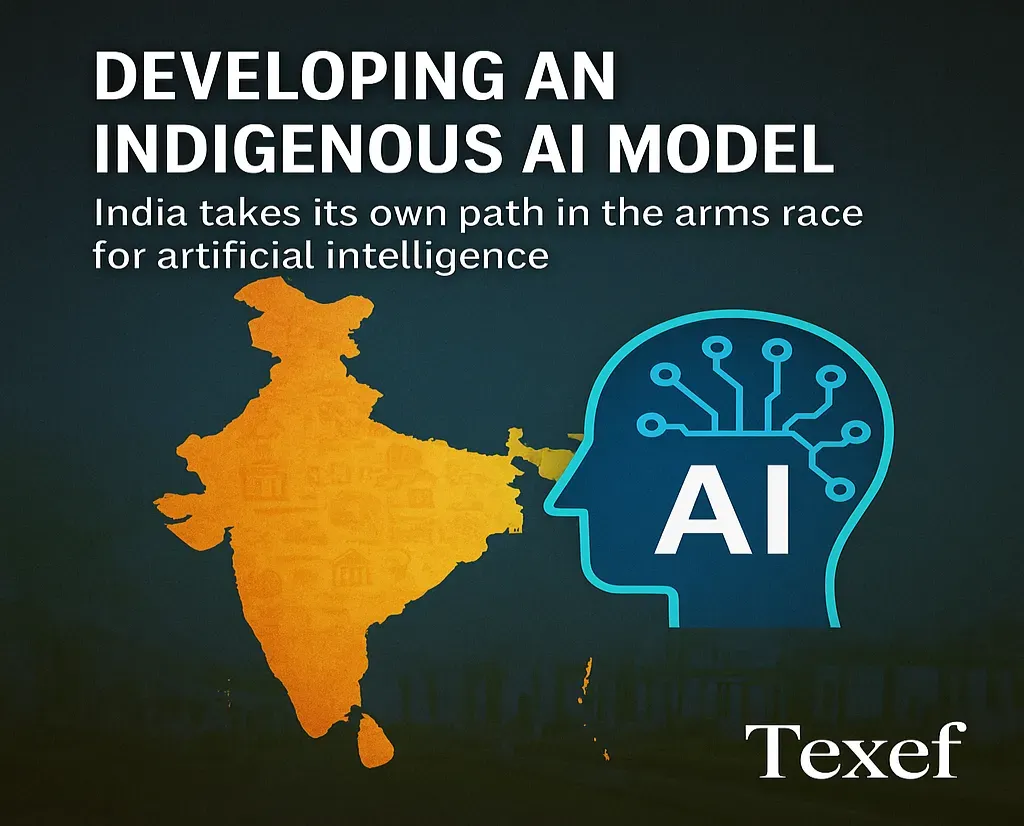
As the arms race for artificial intelligence continues to grow, India has decided to take the road less traveled by. As a sovereign democratic republic, India aims to achieve the same level in developing its indigenous AI model. This model is exclusive to India and is rooted in its culture, linguistic diversity, and socio-economic framework rather than being a replica of other models like OpenAI.
To bring this project to life, India has entrusted Sarvam, a Bengaluru-based AI startup, considered to be a maestro of Indian languages. As part of the Atmanirbhar Bharat initiative, this model will be developed and deployed in India with the help of its local resources. This project is bound to take India to the top level among the global AI markets. And Sarvam has agreed to set up a model starting from scratch and complete it within six months. This groundbreaking technology is sure to bring many laurels to India and help in nation-building by empowering both small- and large-scale industries and government projects by reducing India’s over-reliance on foreign AI models.
Receiving access to 4,000 GPUs to support the development and training of its AI model, Sarvam AI will be specifically fine-tuned for Indian languages. Amid rising concerns over AI being under the monopoly of a powerful few, like China and the US, this initiative attempts to put an end to such geopolitical issues. The biggest issue this project tackles is the issue of language. The foreign AI models, being primarily Eurocentric, are trained on English- and Western-centric data, which is not inclusive of the Indian community, whose language, culture, and socio-cultural nuances differ from those of the West.
One can therefore undoubtedly call this project under the India AI mission one of its kind that attempts to make India more self-sufficient. This will truly be a ‘Made in India’ product in every sense. Everything, from gathering datasets to deployment, takes place within the four walls of the country for its people, by its people, and for its people.